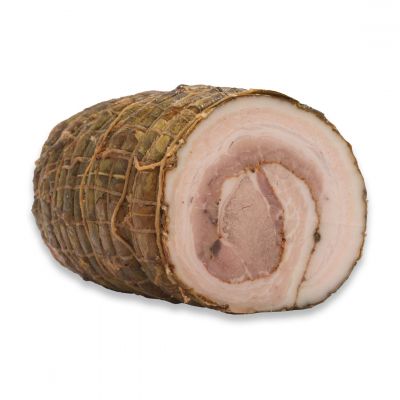
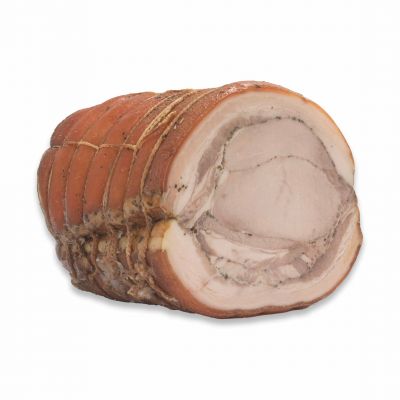
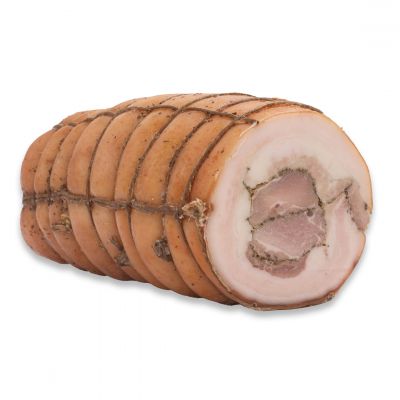
A HISTORIC CURED MEAT FACTORY, ALMOST 100 YEARS OLD, RIGHT IN THE CITY CENTRE - YOU CAN SEE THE CATHEDRAL FROM THE WINDOWS - FOUNDED BY GRANDFATHER GIOVANNI FONTANA IN 1941 AND RUN TODAY BY THE THIRD GENERATION
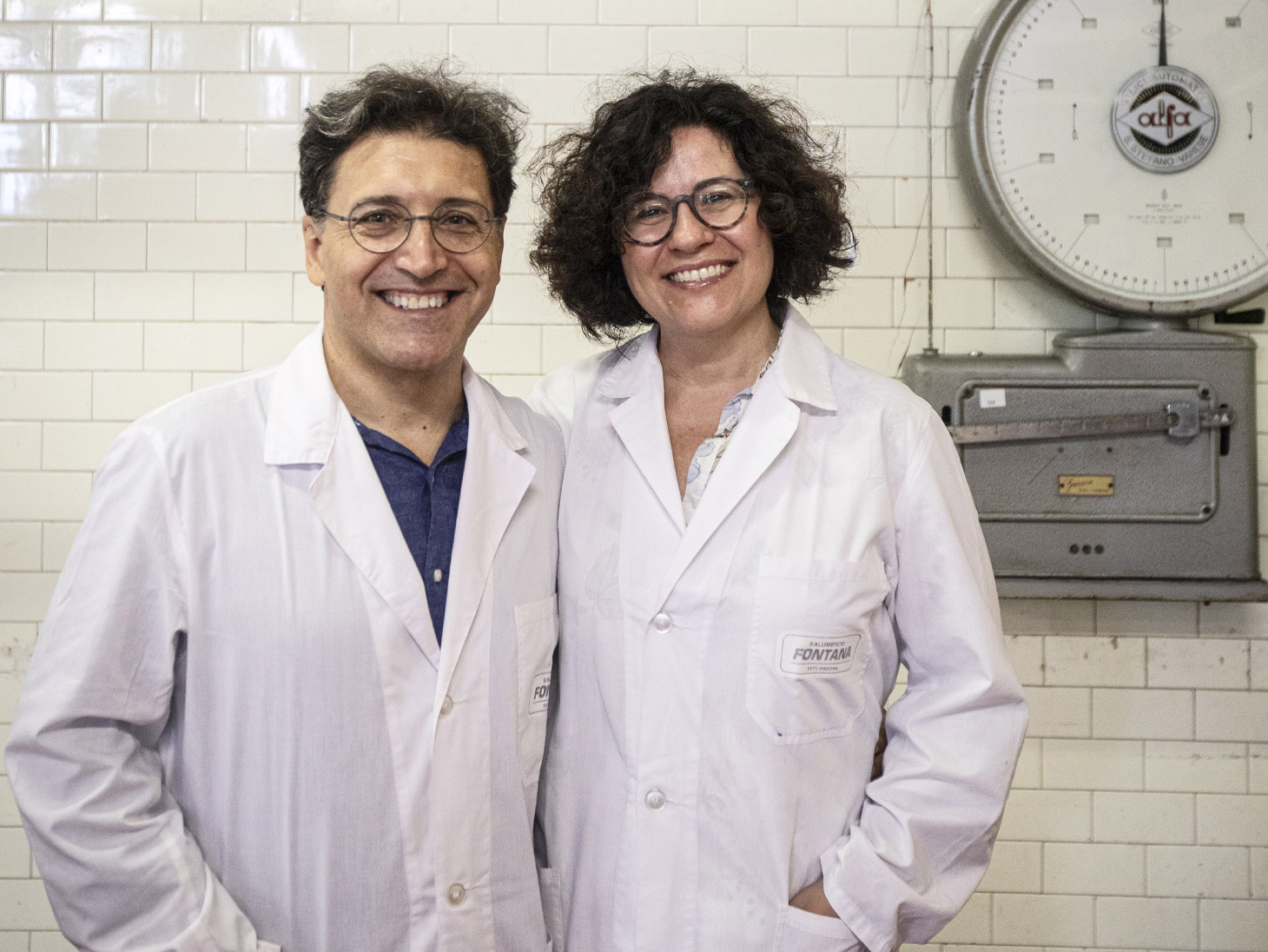
It is forbidden to use the word "passion" to describe Salumificio Fontana: this is Marcello's request when we say goodbye at the end of the visit. So let's try to choose other, less abused words, such as history, study, education; but also curiosity, exploration, hospitality, travel, friendship. These are the words that we take home from the trip, that best describe this place and this family.
Let's start with the place: we are in the historic centre of Este, in the province of Padua. Shocking but true, from the windows of the salumificio you can see the cathedral. A building dating back to the beginning of the century, with an internal courtyard, where until the 1990s there was even a slaughterhouse.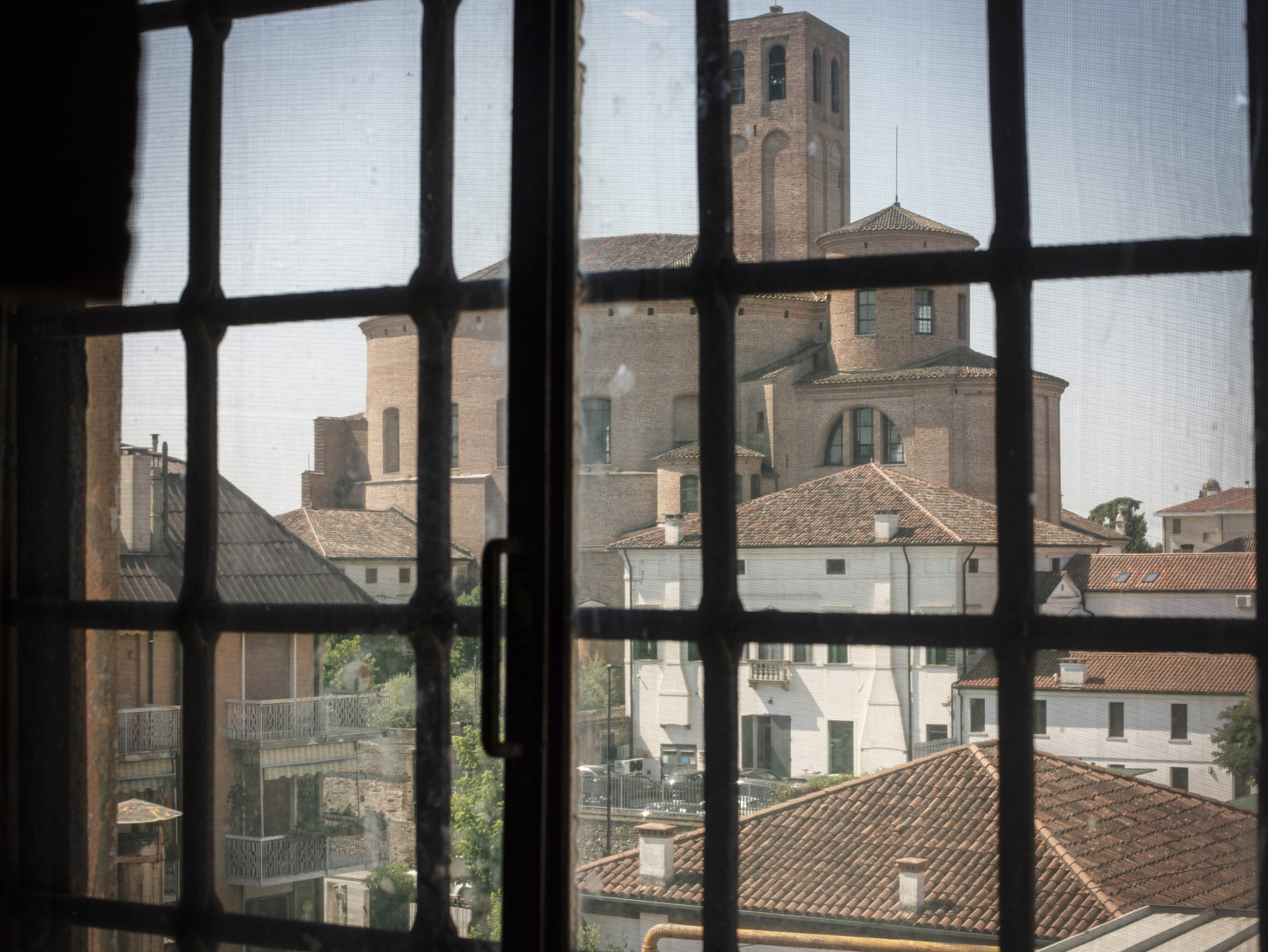
It is a place where time seems to have stood still, bearing witness to a distant tradition that still lives on in the company. The 'mood' is that of industrial archaeology: the machinery of yesteryear refurbished, the old scales, the original tiles: everything is lovingly cared for down to the last detail.
The family, on the other hand, is that of Paola Fontana, the third generation of a company founded in 1941, now running the charcuterie business together with her husband Marcello. Grandfather Giovanni Fontana started working with his brother Attilio in 1919, but after twenty years their paths diverged and each founded his own company.
As often happens, family history is intertwined with the history of places, and Paola tells us about when her grandparents lived upstairs from the salumificio and she, as a child, used to climb the iron ladder - which we also climb today - to go and look around the terrace from which the view can embrace the whole of city of Este. 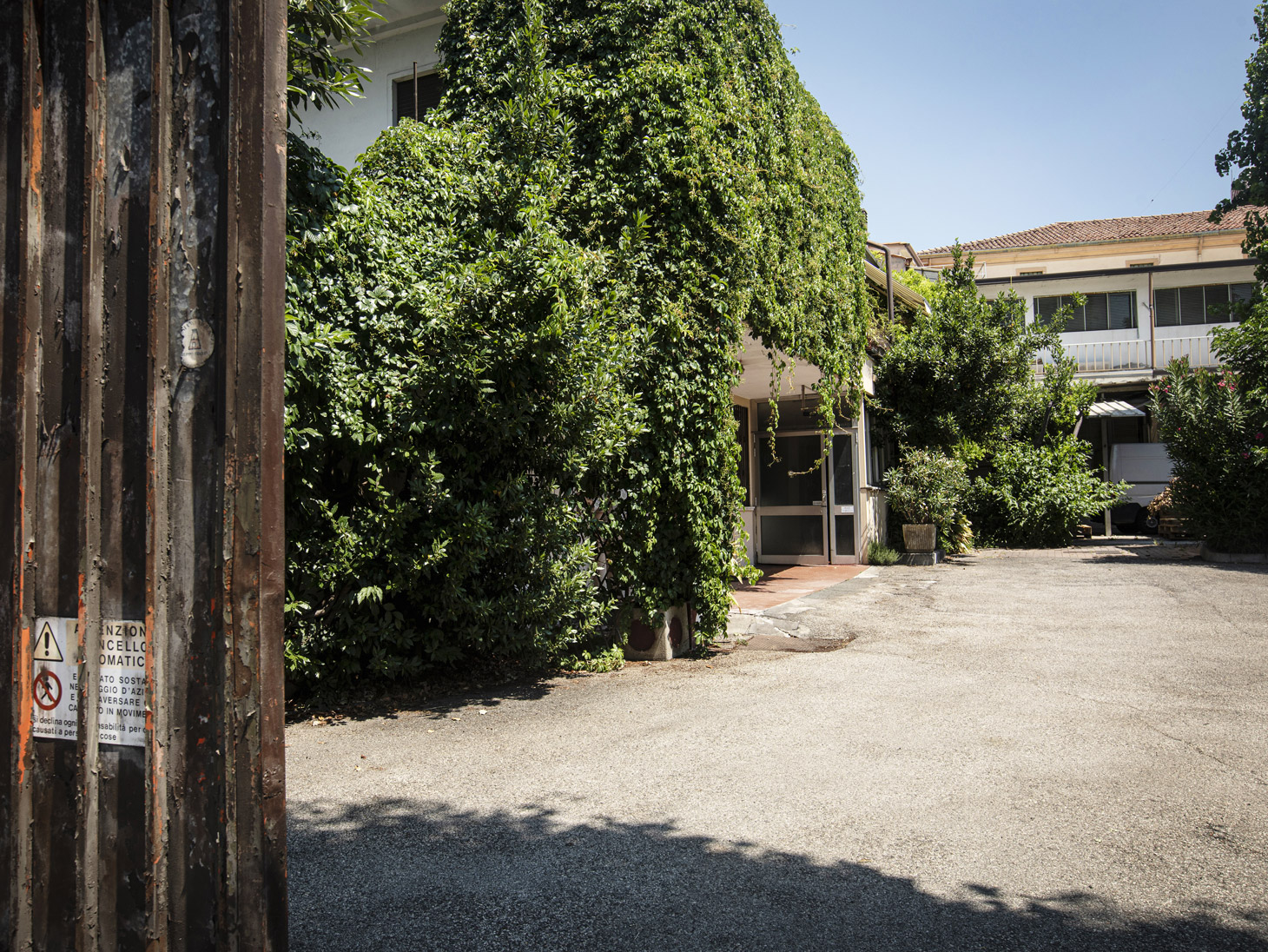
"We did some research involving historian Claudio Grandis - Paola tells us: the barchessa dates back to 1910 and was originally used for drying grain.
Around the 1930s it became the military dormitory of the Euganean Legion: on the ham racks you can still see the numbers of the soldiers' beds, while the inner courtyard was used for military drills. In 1941, grandfather Giovanni bought the building with the idea of using it for drying and seasoning cold cuts. Back then - as still today - all cuts of pork were processed, and all processing stages were handled within the farm, including slaughtering, until the 1990s. In the post-war period, the Fontana family took back possession of the factory, which had been requisitioned by the German army during the Second World War to supply the military commands in the area with meat and salami. In 1951, grandfather Giovanni was forced to leave the reins of the business for health reasons, but grandmother Lea decided to carry on the family business with her four children. One of them - dad Francesco - now 89 years old - is still with the company today".
There is great complicity between Paola and Marcello, unity of vision and mutual support: you can feel it by the way they tell the company, and their story. They met at university, a course in Tourism Economics, in Rimini. After graduating, in 2001, Paola immediately joined the company and from the very beginning was in charge of administration.
Marcello instead worked in tourism for a few years, first in Sardinia and then in Este. He joined the company in 2005, to replace Paola last minute, in view of the arrival of their first child. And then he decides to stay. 'But how? Are you going to abandon tourism?" an old university teacher asked him at the time. 'On the contrary, I want to bring hospitality into the company': was his answer.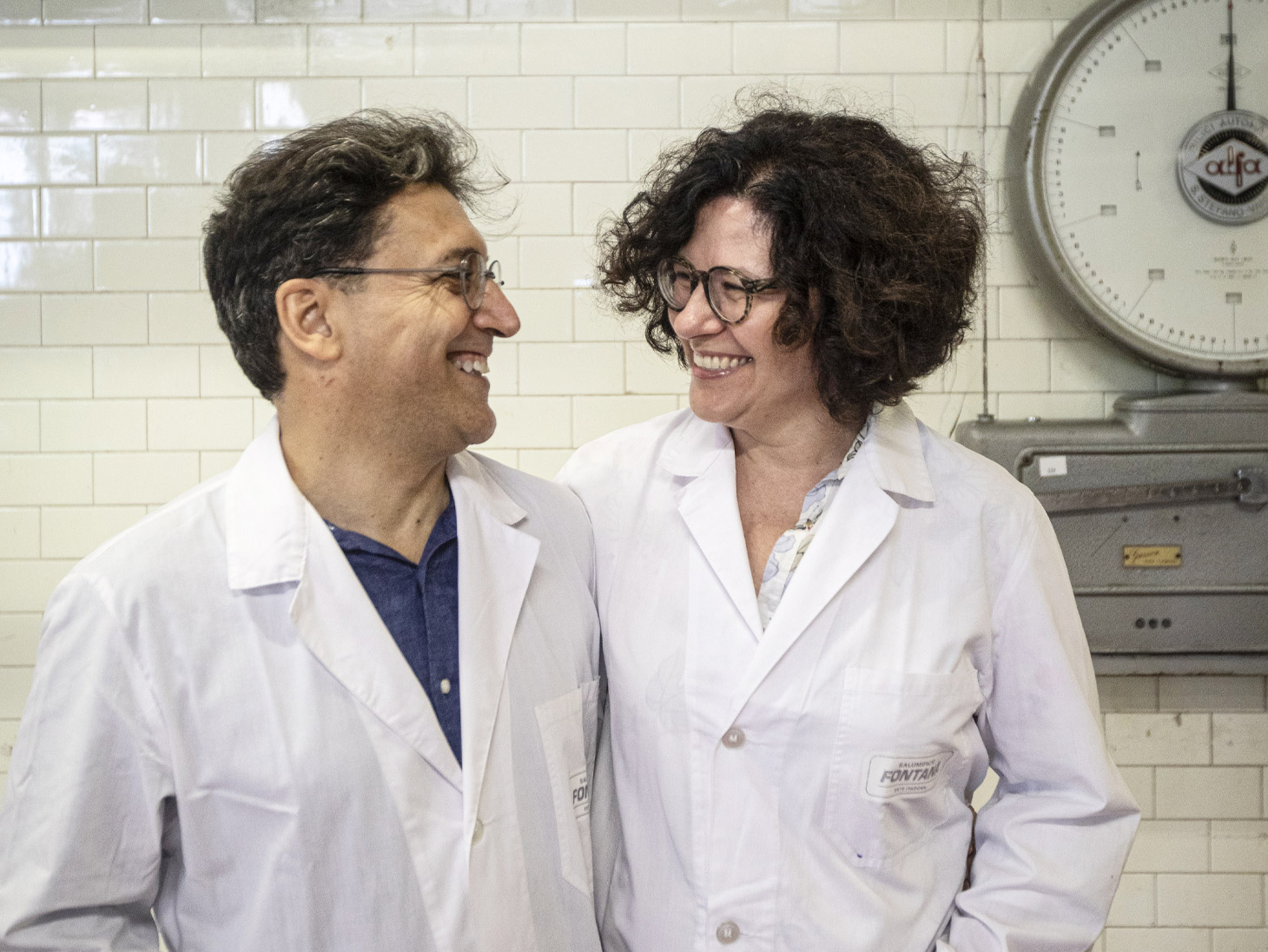
The hospitality project began to take shape in 2012, when they were contacted by a German tour operator to organise a visit for a group of tourists.
Today they are present in the Abano Montegrotto Terme tourism portal, welcoming visiting students from various universities including the University of Rimini, the Food and Wine course of the University of Padua, and Boston University. They offer a wide variety of experiences, from team building - with competitions to recognise the spices used in different cured meats - to slicing and pairing courses for professionals. Marcello has fun with questions, from the easy ones - "how many hams are made from a pig?" - to the more challenging ones: "how many legs are processed in the different consortia of Prosciutto Veneto DOP, San Daniele DOP and Parma DOP? (55,000, 2.7 million and 7 million respectively)".
His attitude for teaching is clear, you can feel he really likes it, and indeed we discover that he teaches economics in a course for restaurateurs at the Salesian College in Este. In addition to training and hospitality, since 2015 Marcello has been overseeing production, while Paola continue to manage administration and, of course, hospitality, together with Marcello. In addition to them, eight other people work in the company, between offices and production. Mauro joines us. He is in charge of production and today has been asked to explain us how Porchetta, Filetto Cotto and Timpa are made.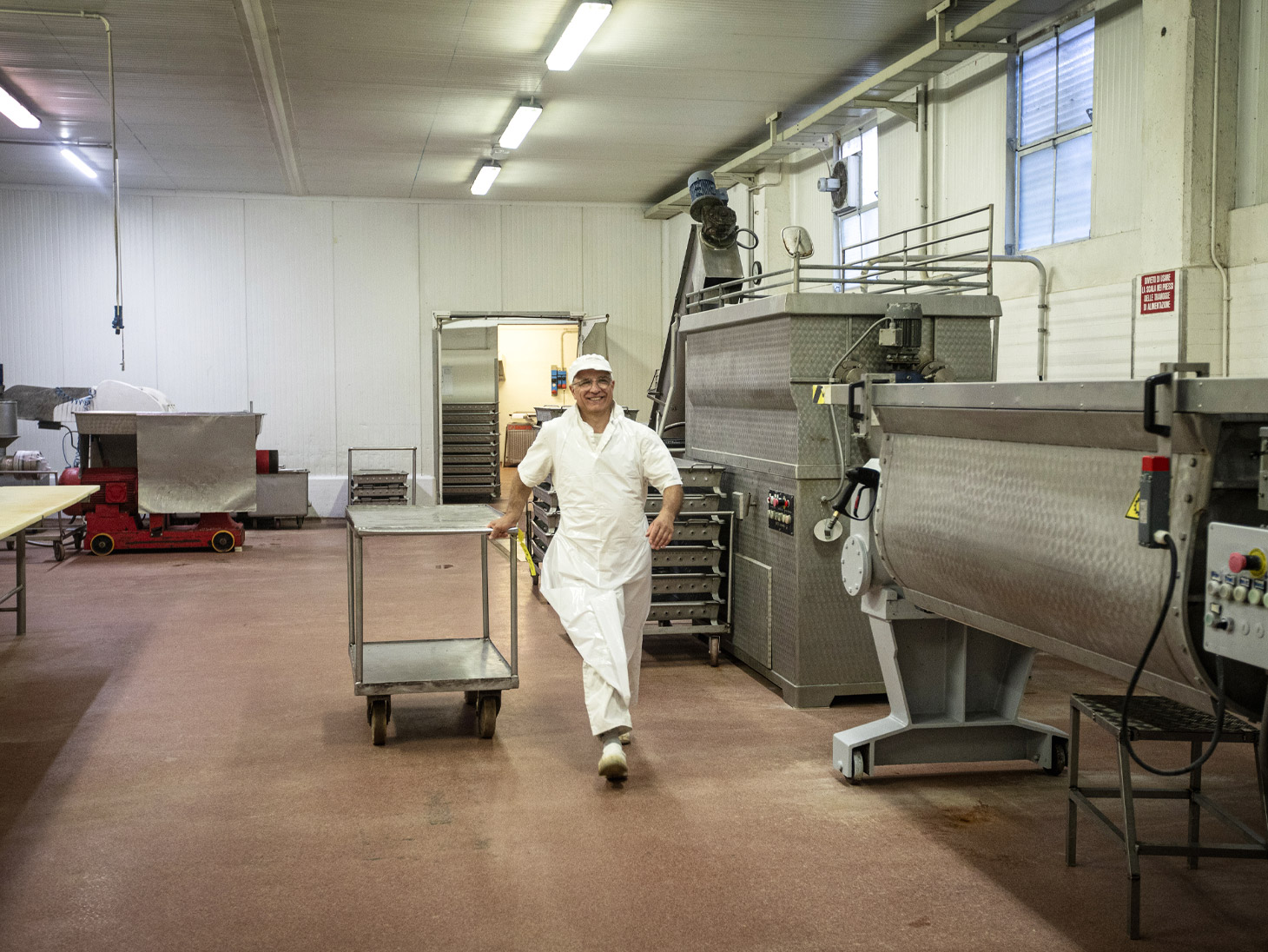
Let's start with the cuts, which are trimmed by hand: two pancettas with rind and tenderloin for the Porchetta; one pancetta with rind and two fillets for the Filetto al Naturale; one skinned and degreased pancetta and one fillet for the Timpa. On Monday the meat arrives, strictly Italian pigs, 90% of which come from farms in the Veneto region, or at most from Lombardy or Emilia Romagna: the various anatomical cuts are put in the cell to rest until the following day, as processing begins on Tuesday. "We process the whole pig, as in the past, and produce a wide range of cold cuts - Mauro confirms: from boneless loins we obtain fillet and tenderloin, from pancettone we obtain bacon for the Filetto and skinned bacon for the Timpa. On Wednesdays we produce salami and pancetta, in winter sausages. 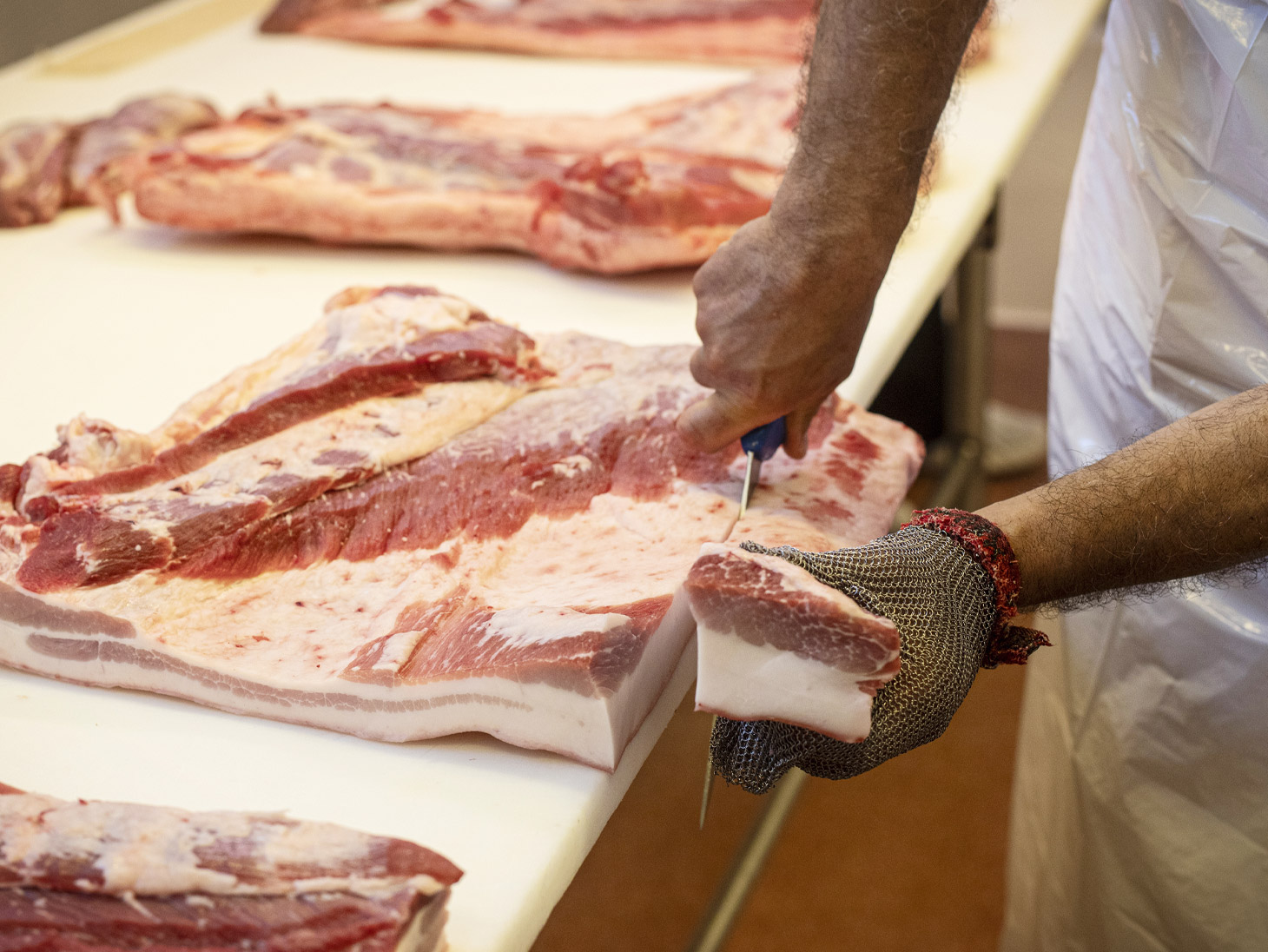
Filetto and porchetta are salted for a couple of days, from Tuesday evening until Thursday: in the morning they are tied and in the evening cooked in the ovens: 13 hours for the Porchetta, 7 hours for the Filetto al Naturale, 5 hours for the Timpa.
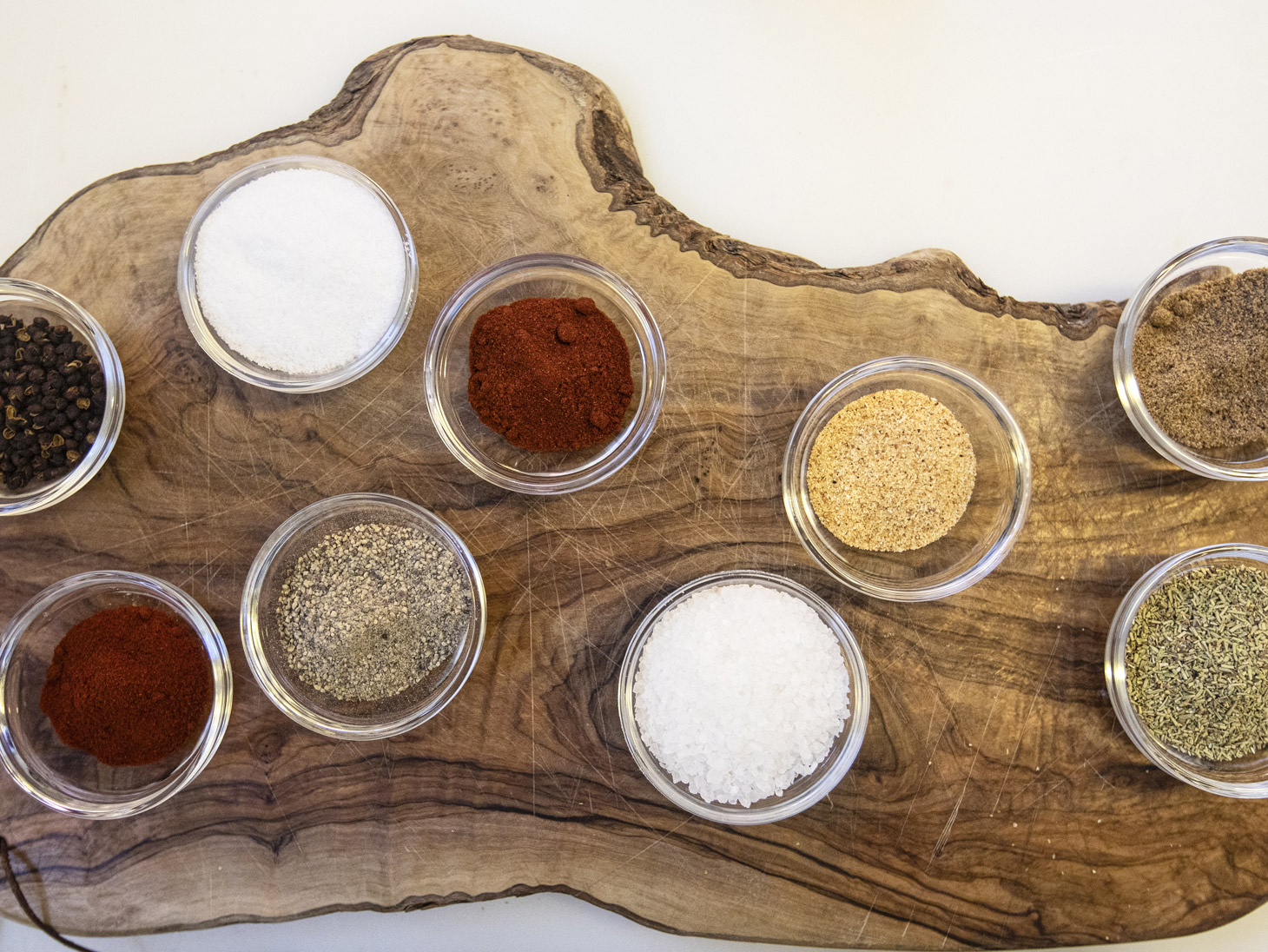
The spicing also changes, of course: the bacon with rind used for the first two roasts - Porchetta and Filetto - rest for two days with a mixture of salt, rosemary, sage, pepper and garlic, whereas Timpa is dry-salted by rubbing with a spice mix: smoked paprika, both sweet and hot, Timut pepper, salt, black pepper powder and coriander.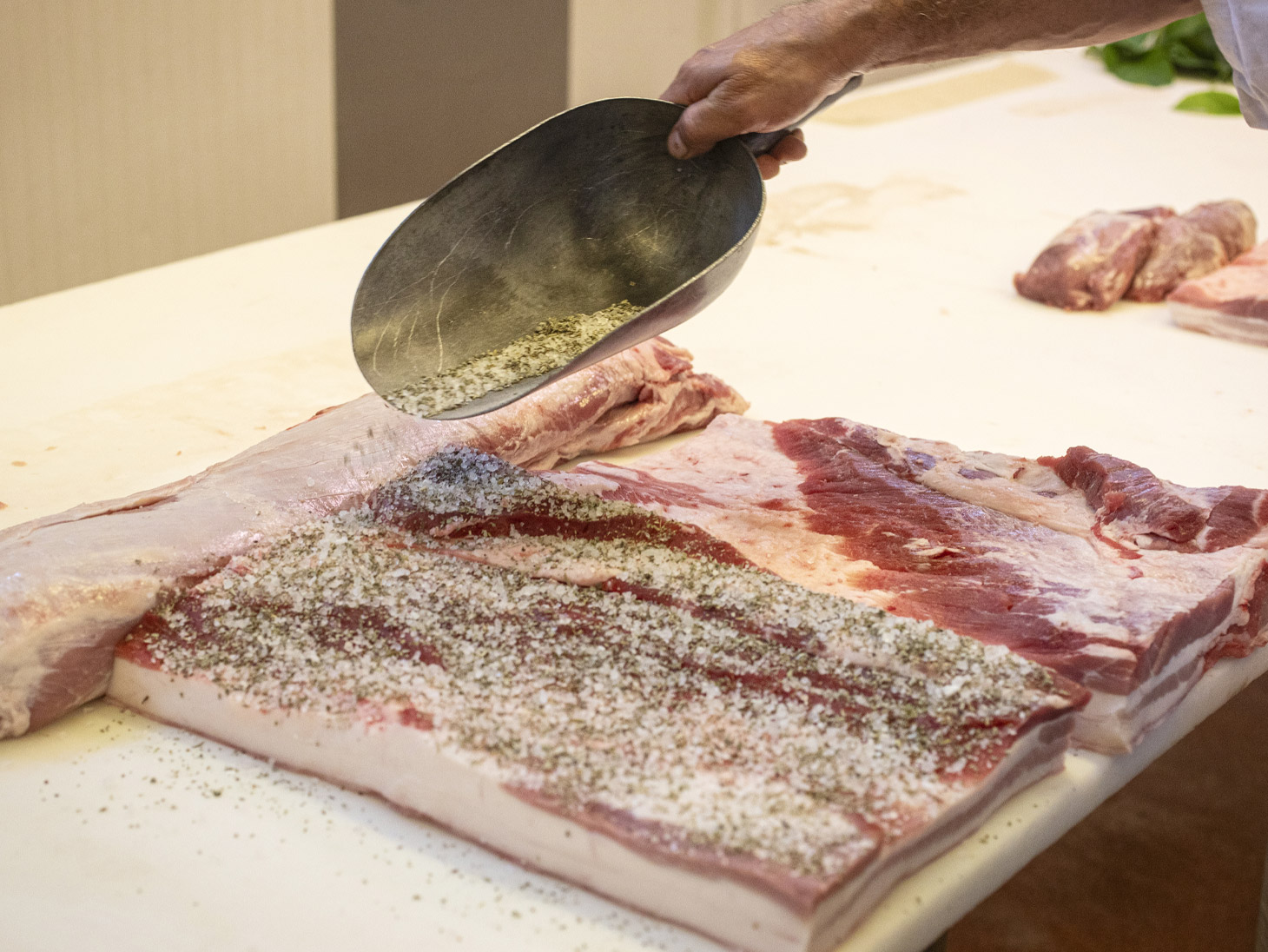
"A journey and a friendship. That's how the Timpa fillet was born - Marcello tells us. A few years ago we visited a trade fair in France, where a lot of smoked cooked fillets were displayed and sold, at important prices. So we decided to try making a roast fillet ourselves.
We started experimenting with some chef friends, because we were looking for a special combination, a fresh product that would break the mould of the classic charcuterie. We tried with Kimchi but it did not guarantee a consistent quality, so we switched to Timut and coriander, and the citrus scents of Timut pepper reminded me of the lemon groves of my homeland, Sicily. Thus we got the idea of wrapping the fillet in Timpa lemon leaves, which are particularly fragrant even after cooking: "when you open the oven, the scent is unmistakable!"
As we write, Marcello and Paola are collecting leaves in the family lemon grove, which is located in the Timpa di Acireale, a cliff overlooking the sea, which stretches over 6 km in a protected natural area. Three times a year they go to Sicily and bring home two suitcases of leaves, picked from centuries-old lemons grown without pesticides or treatments, which are washed, dried and stored in the refrigerator. 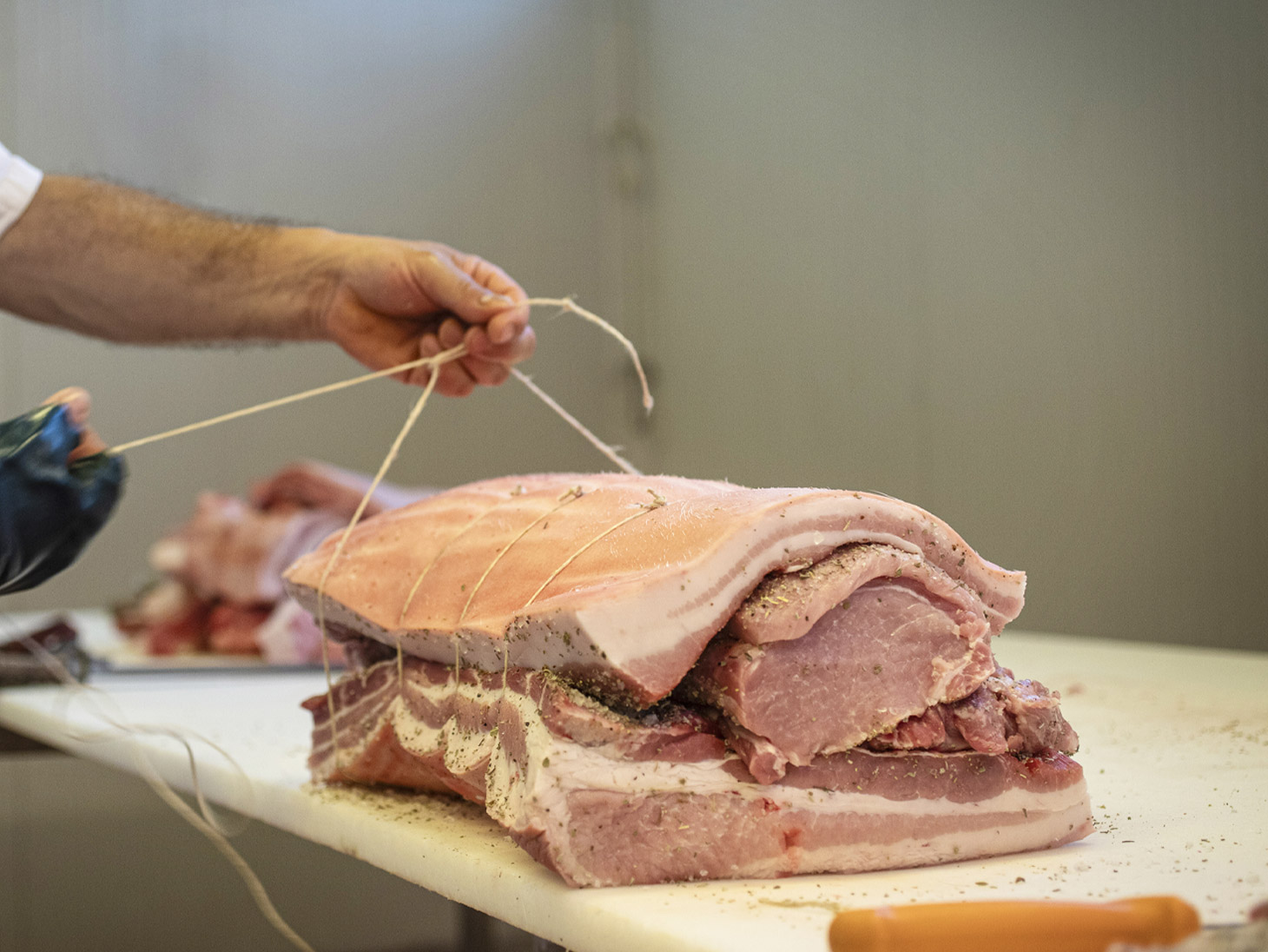
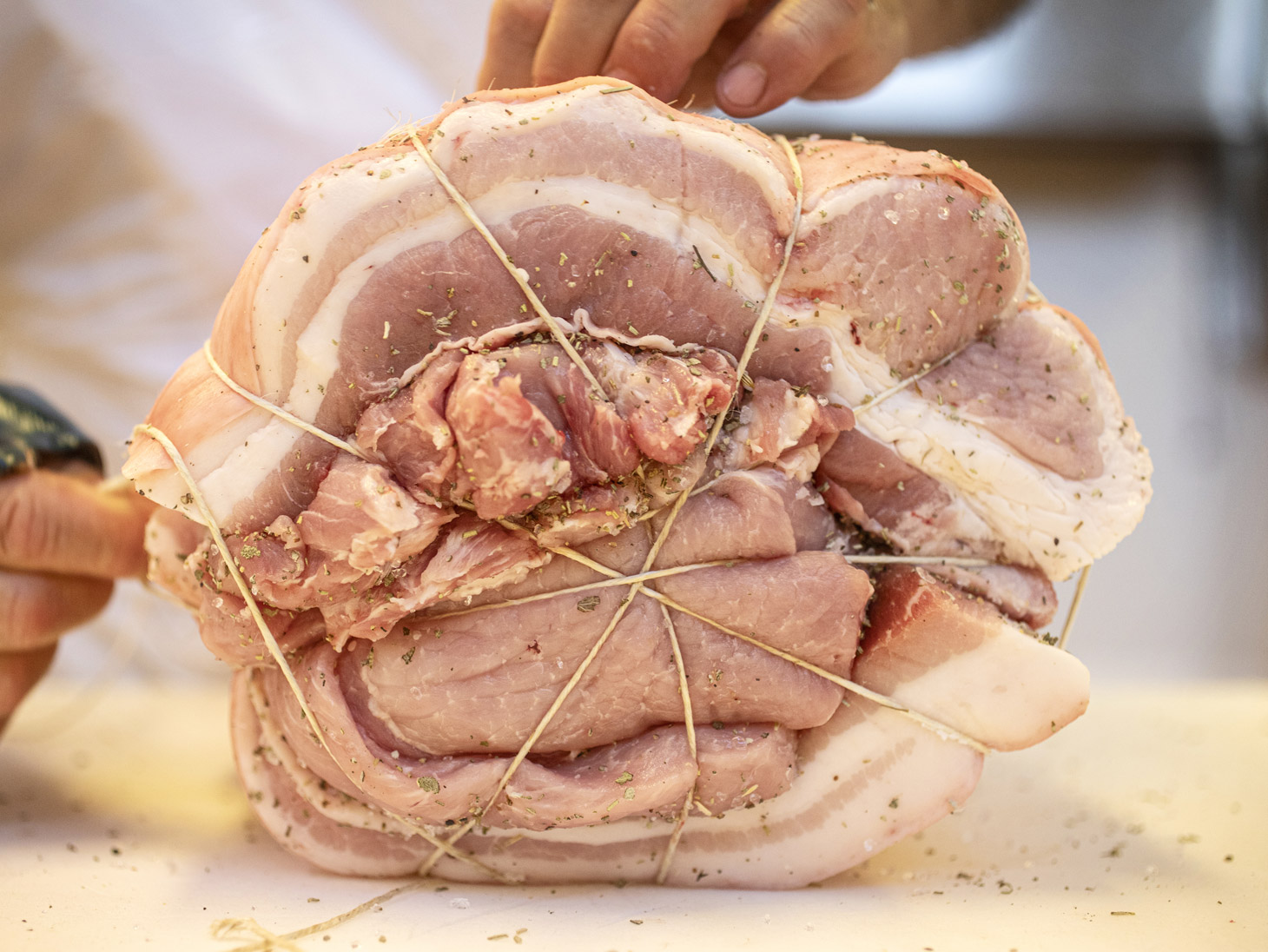
Marcello continues to test us: "How do you recognise hand tying?" Mauro replies directly, while he is super quickly tying the porchetta: "First of all, the type of twine: classic twine in hand tying, elastic twine for machine tying; and then the type of knot; another clue is that, in hand tying, if the product drops in weight, the tying loosens up because the twine is stiffer".
We couldn't fail to visit the ham curing rooms: Salumificio Giovanni Fontana has always been a member of the Consorzio di Tutela del Prosciutto Veneto DOP. this was precisely why we sought them out in the first place. "Developing the raw ham line requires a lot of time and resources, a process that has to be done gradually and carefully, to avoid putting the company in financial crisis" - Paola explains. That is why we cannot tell you about their Prosciutto Veneto DOP yet.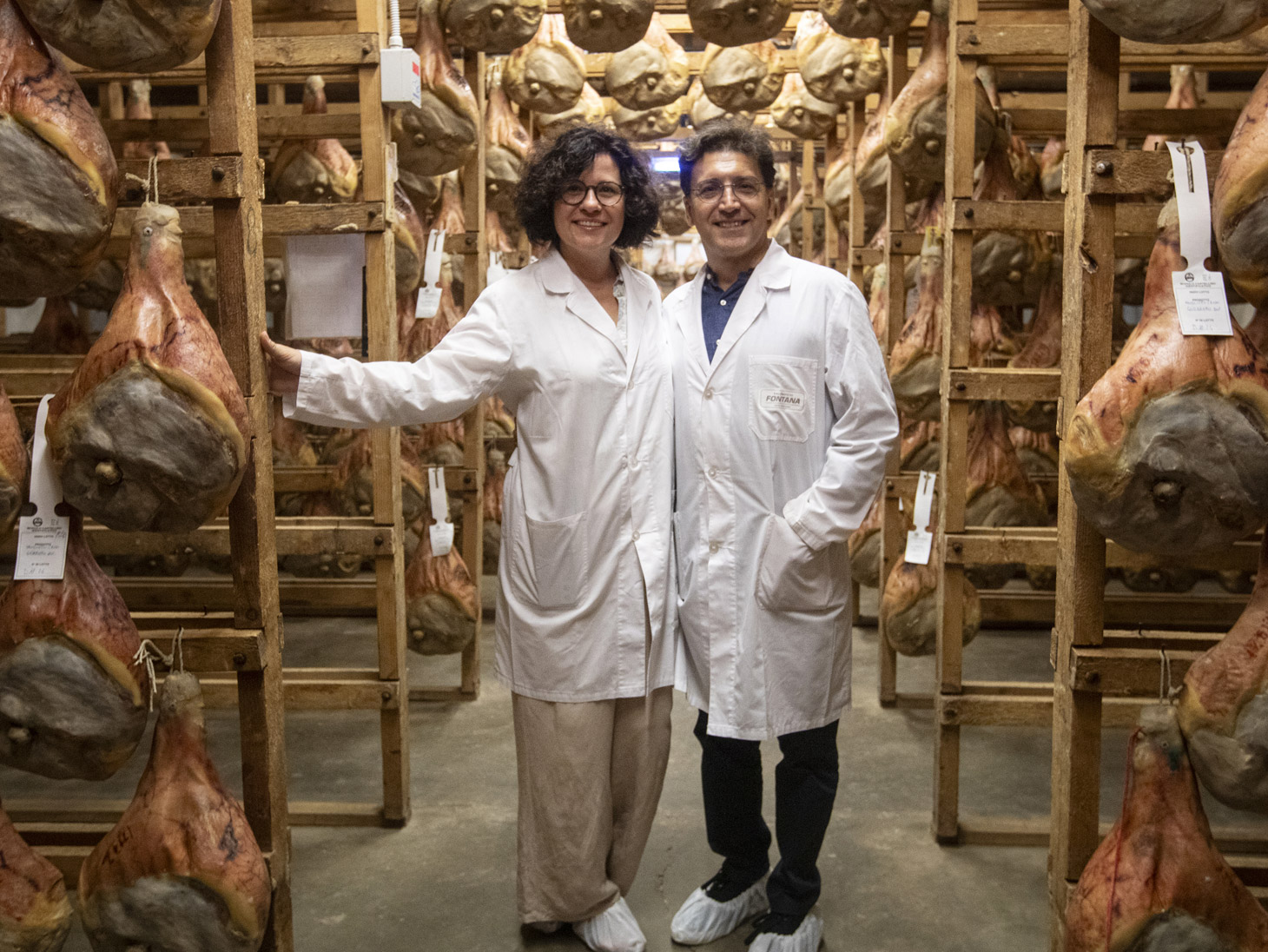
In these times, when we want everything right away and are always in a hurry, let's exercise patience. And, in the meantime, we console ourselves with a tasting of their unmistakable roasts, all extremely recognisable for their refined spiciness, which reconfirms the extreme care, research and attention to the raw materials used.
@Marcello: promise kept!