The product
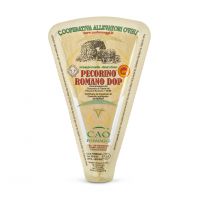
Pecorino Romano DOP Crosta Nera
Pecorino DOP produced in Sardinia, in 1/8
Code:
31542
Country of origin:
Italy - Sardinia
Type of Milk:
Sheep's milk
Weight:
3,5 kg approx
Minimum order:
1 piece
| Description | Classic Pecorino Romano DOP cheese produced in Sardinia using thermised milk from Sardinian sheep, collected exclusively from the cooperative's member farmers, and matured for at least 5 months |
|---|---|
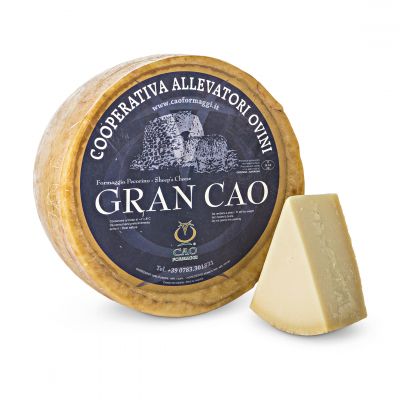
| Appearance | The cheese has a white paste with no eyes, and a thin, white rind with a distinctive black covering |
| Taste | Intense, flavourful and slightly spicy |
| Maturing | At least 5 months |
| Curiosity | CAO Formaggi (Cooperativa Allevatori Ovini / Sheep Farmers' Cooperative) is a cooperative comprising 700 members, founded in 1966 with the aim of promoting Sardinia's pastoral heritage and bringing together a group of farmers to transform the milk from their respective farms into distinctive cheeses |
| Suggestions | Pecorino Romano is an essential ingredient in traditional Roman dishes such as pasta alla carbonara, all'amatriciana or cacio e pepe, but it also adds an extra touch to the filling of fresh stuffed pasta. It pairs beautifully with artichokes, broad beans or asparagus |
| Ingredients | Thermised sheep's MILK, salt, rennet. Surface treated with colour: E172. |
|---|---|
| Allergens in ingredients | Milk and products thereof |
| Weight | 3,5 kg approx |
| Packaging | Vacuum packed |
| Storage Conditions (packaged products) | Keep at +4 °C/ +8 °C |
| Instructions for use | Rind not edible. |
| Country of origin of the primary ingredient | Italy |
| Nutrition Declaration | Energy: 1683 kJ / 401 kcal Fat: 33 g of which saturates: 23,6 g Carbohydrate: 0 g of which sugars: 0 g Protein: 26 g Salt: 4,7 g Typical value per 100 g |
The producer
CAO Formaggi - Fenosu (OR) - Sardinia
Why we chose them
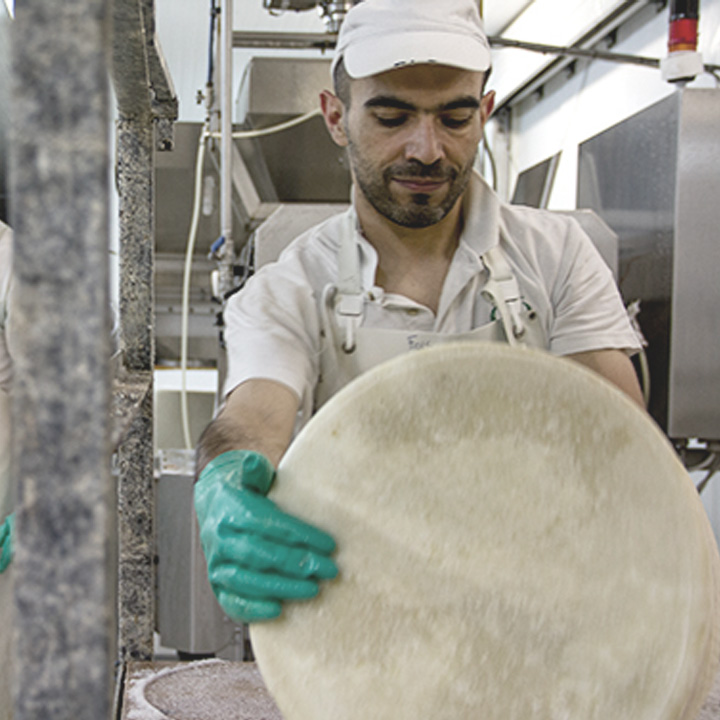
CAO Formaggi - the Italian acronym for Cooperativa Allevatori Ovini, meaning Sheep Breeders Cooperative - is a Cooperative composed of 700
members, that was founded in 1966 in the province of Oristano.
The cooperative was established with the aim of bringing together a group of farmers to transform the milk produced in the respective companies in
order to create a distinguished production of delicious cheeses with high quality standards. The farmers' union also intended to enhance and
recognize the work and characteristics of the sheep milk heritage of the territory.
From the same producer